*Originally published in [The AI Monitor](https://theaimonitor.substack.com/p/the-ai-skills-gap) · 2024-10-22*
[Read on Substack →](https://theaimonitor.substack.com/p/the-ai-skills-gap)
---
[](https://substackcdn.com/image/fetch/$s_!7NOJ!,f_auto,q_auto:good,fl_progressive:steep/https%3A%2F%2Fsubstack-post-media.s3.amazonaws.com%2Fpublic%2Fimages%2F0dc3ca0c-221e-43dd-95b1-b1840eb95fdc_1147x536.png)
We assume education prepares us for work. This assumption relies on a world where the rate of learning exceeds the rate of change.
That world is gone.
Universities optimize for stability. Technology optimizes for speed. This is not a bug. It is a structural feature of how institutions work. Nowhere is the friction more visible than in the market for AI talent. Companies meet confident candidates who cannot ship. Companies interview candidates with perfect GPAs who have never touched a live dataset. The gap between credential and capability has become a chasm.
## The Structural Mismatch
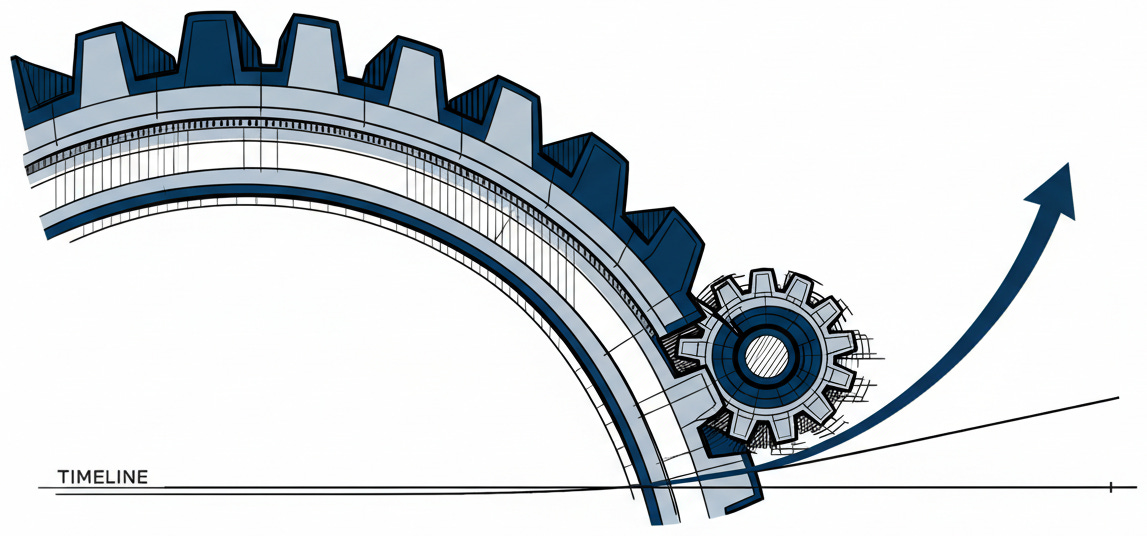
The AI skills gap is not a curriculum problem. Curriculum problems can be solved with committees and textbook updates. This is a clockspeed problem. Technology evolves in months. Institutions adapt in decades.
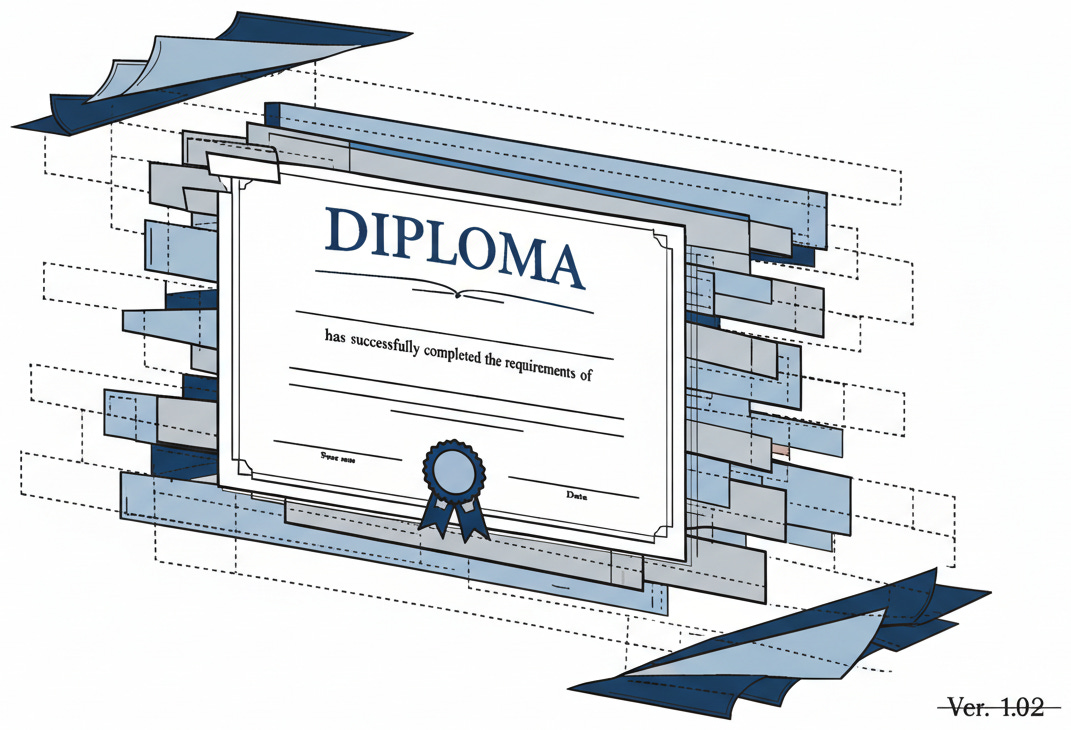
Consider the mechanics. An AI framework emerges, matures, and becomes obsolete in three years. A university curriculum revision takes two. By the time a course reaches students, the technology is legacy. A student graduating in 2024 is deploying techniques designed in 2020. In software terms, the education is deprecated before the diploma is printed.
The TensorFlow to PyTorch migration illustrates the pattern. TensorFlow dominated AI education through 2018. By 2020, PyTorch had captured research. By 2023, industry had followed. Students who spent four years mastering TensorFlow graduated into a market that had moved on. The framework that launched their education became a liability on their resumes. This is not unusual. It is the new normal. Every cohort of AI students faces the same risk: mastering tools that will be obsolete by graduation.
Theory travels well through time. The mathematics underlying neural networks has been stable for decades. Gradient descent, backpropagation, the statistical foundations of machine learning: these remain constant while everything built on top of them churns. But the practical skills employers need shift too quickly for traditional academic cycles. The framework that dominated three years ago may be legacy today. Last year’s deployment patterns are already obsolete. Universities produce graduates who understand why AI works. Companies need people who can make it work, today, on this dataset, with this infrastructure.
The problem compounds at the leadership level. Pluralsight research reveals that 90% of executives do not completely understand their teams’ AI skills and proficiencies. Leaders cannot assess what they cannot see. They hire based on credentials because credentials are visible. Capability is harder to measure, especially when the people doing the measuring lack the expertise to evaluate it. The result is a market that selects for signals over substance, degrees over demonstrated ability.
The structure creates the mismatch, not the people. Companies interview candidates with sterling credentials who cannot ship a model. Graduates arrive at jobs and discover their education was not wrong, just late. They learned what they were taught. They were taught what was current when the curriculum was written. The gap is nobody’s fault and everybody’s problem. Deloitte research finds that leaders are 3.1 times more likely to replace workers than retrain them. Not because retraining is impossible, but because the pipeline was supposed to deliver people ready to work. Both sides are right to expect more. Neither designed the structure that fails them.
[](https://substackcdn.com/image/fetch/$s_!yh9-!,f_auto,q_auto:good,fl_progressive:steep/https%3A%2F%2Fsubstack-post-media.s3.amazonaws.com%2Fpublic%2Fimages%2F4084a6c9-2111-46d5-96b1-8fb286099efd_1071x730.png)
## Bridging Different Clockspeeds
If the gap is structural, solutions must address the structure, not the syllabus. We cannot ask universities to match industry pace. We must build bridges that allow industry currency to flow into academic environments without breaking the university.
The University of Florida’s partnership with NVIDIA offers a template. NVIDIA did not ask the university to move faster. A $70 million investment, combining a $25 million donation from NVIDIA co-founder Chris Malachowsky, $25 million in hardware, software, and training from NVIDIA, and $20 million from university funds, brought industry pace inside the walls. The partnership delivered HiPerGator AI, a supercomputer built on 140 NVIDIA DGX A100 systems that went into production in January 2021. UF became the first American institution to deploy these systems. The university has since hired over 100 new AI professors. Students now train on the same infrastructure professionals use. The university maintains its research mission while industry gets access to talent trained on current technology. Do not wait for the curriculum to catch up. Build the parallel system.
Amazon is doing this with its AI Ready program. Launched in November 2023, AI Ready commits to training two million people globally in AI skills by 2025. The program offers eight free courses covering both fundamentals and advanced applications. An AWS Generative AI Scholarship extends the reach to 50,000 students through Udacity. This is not philanthropy dressed as training. It is an operational acknowledgment that the conventional pipeline cannot supply what industry requires. When the world’s largest cloud provider builds its own talent infrastructure, the message is clear: waiting for universities is no longer an option.
Ericsson took a different path. The telecommunications giant partnered with Concordia University’s Applied AI Institute to create a custom 16-week program for its engineers. The first cohort launched in November 2021 with 120 participants. The curriculum spans data preparation, machine learning, deep learning, and generative models. Over 40% of training time is dedicated to project-based work. Engineers solve the problems they’ll face on Monday, not textbook exercises. The partnership has since expanded into a multi-year commitment. When companies invest millions in training infrastructure that universities are supposed to provide, they are not supplementing education. They are routing around it.
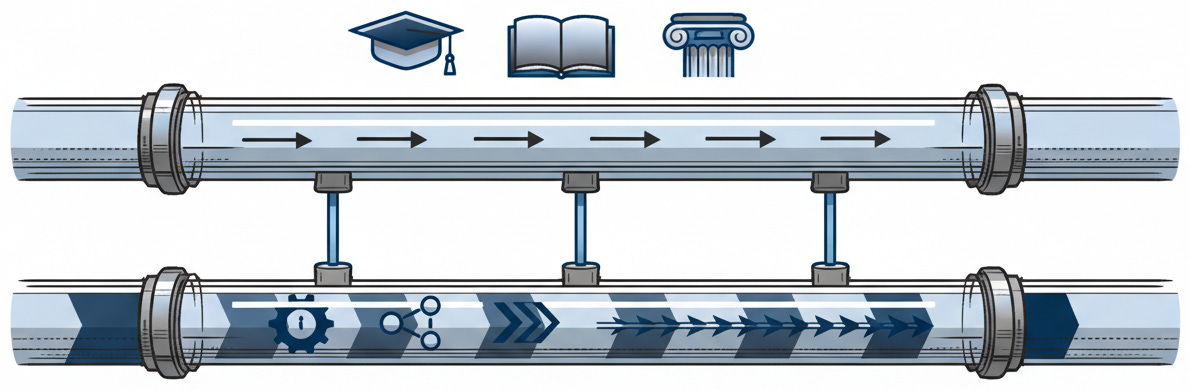
The established pipeline remains in place, but a parallel system now runs alongside it, moving at industry speed while universities maintain their necessary slower rhythm.
[](https://substackcdn.com/image/fetch/$s_!Ghys!,f_auto,q_auto:good,fl_progressive:steep/https%3A%2F%2Fsubstack-post-media.s3.amazonaws.com%2Fpublic%2Fimages%2F1c9761e8-9a8c-4ebe-99b4-ae5d2f1497b0_1190x390.png)
## The Alternative Credential Economy
Alternative credentials operate on industry timescales. Boot camps, certifications, and intensive programs update curriculum in weeks rather than years, focusing on practical skills for professionals who cannot return to multi-year degree programs.
The market has noticed. The coding boot camp industry is projected to grow by $2.8 billion between 2024 and 2028, expanding at a 27% compound annual growth rate. This growth reflects a fundamental shift in how employers value credentials. The four-year degree remains a signal, but it is no longer the only signal, and for many roles it is not the most relevant one.
Outcomes data supports the shift. Boot camp graduates report 79% employment rates within six months of completion. The programs succeed because they optimize for what employers actually need: people who can contribute immediately. They fail when they optimize for breadth over depth. A 12-week program cannot replicate the theoretical foundations of a computer science degree. But it can produce someone who ships models while the CS graduate is still learning version control. These alternatives do not replace traditional education. They patch its gaps in real time, trading depth for currency.
[](https://substackcdn.com/image/fetch/$s_!AdfU!,f_auto,q_auto:good,fl_progressive:steep/https%3A%2F%2Fsubstack-post-media.s3.amazonaws.com%2Fpublic%2Fimages%2Fdf5f3b7c-68e9-4089-944d-753328b14491_930x420.png)
## The Upskilling Imperative
The skills gap is not just a hiring problem. It is a retention problem. The workers companies already employ need capabilities their original training never anticipated.
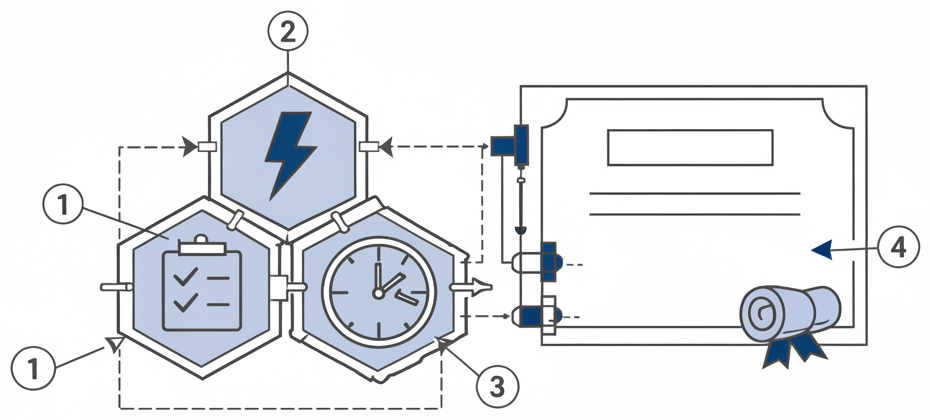
The scale is staggering. IBM estimates that 40% of the global workforce will need reskilling within the next three years due to AI implementation. This is not a distant forecast. It is already underway. Yet the investment in upskilling lags far behind the investment in technology. Randstad research finds that over 50% of workers believe AI will future-proof their careers, but only 13% have been offered AI training by their employers. The gap between expectation and provision creates organizational risk. Workers assume they will be prepared. Organizations assume workers are preparing themselves. Neither assumption holds.
Career mathematics have changed. Not gradual decline but active obsolescence, as the tools and methods that defined expertise give way to approaches never encountered. Continuous learning is no longer a competitive advantage. It is a survival requirement.
## The Interdisciplinary Dimension
The interdisciplinary dimension matters more than technical depth alone. AI implementations fail less often from algorithmic inadequacy than from misunderstanding the problem domain. A healthcare AI built by engineers unfamiliar with clinical workflows will struggle regardless of model sophistication. A financial model built without understanding regulatory constraints will never reach production.
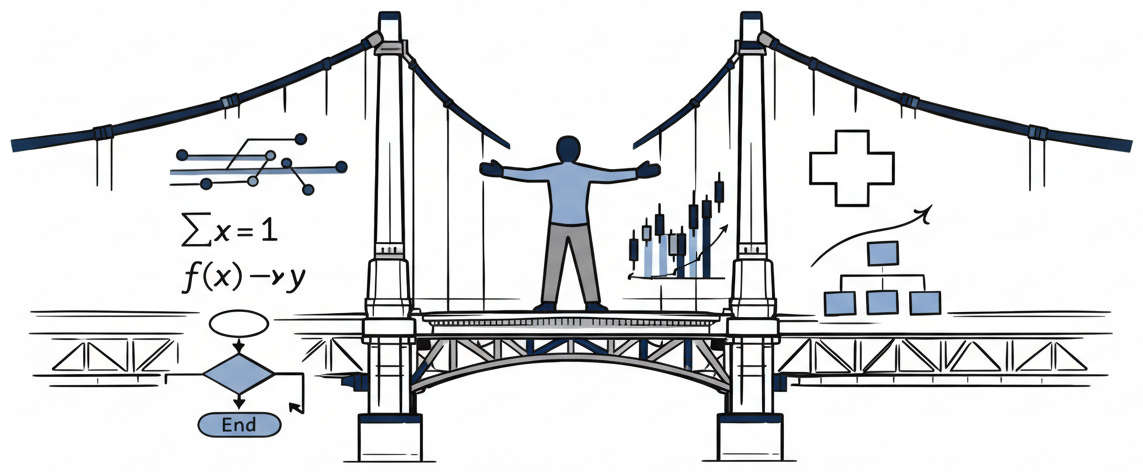
The most valuable AI practitioners are not the deepest technical specialists. They are the ones who understand both the technology and the context in which it operates. The AI-savvy business analyst who can translate organizational needs into model requirements. The domain expert who can speak both languages, translating between technical capability and operational reality. This hybrid fluency is rare precisely because education silos technical and domain knowledge into separate tracks. The market rewards those who build bridges between them.
[](https://substackcdn.com/image/fetch/$s_!2Fv_!,f_auto,q_auto:good,fl_progressive:steep/https%3A%2F%2Fsubstack-post-media.s3.amazonaws.com%2Fpublic%2Fimages%2F6e810611-1a1a-4102-bbce-25cac8d86401_1143x472.png)
## The Permanent Condition
The skills gap is as old as formal education. What has changed is the volatility of the environment. When technology evolves slowly, the lag is manageable. When it accelerates, the lag compounds. Each graduating class enters a world that is further ahead of them than the last. The gap that once measured months now measures years. Knowledge that once lasted a career now expires within a single job.
The answer is not faster universities. Universities serve a purpose beyond workforce preparation. They provide the stability required for research and deep inquiry. Demanding they operate on startup timescales would destroy the very value they offer. We do not need universities to become more like startups. We need a system that tolerates the difference.
The traditional model assumes education precedes employment: learn first, then apply. The emerging model treats learning as continuous. The engineer who stops learning after graduation is obsolete within five years. The professional who treats education as a finite phase rather than a permanent state is building on a foundation that erodes beneath them. The boundary between student and professional dissolves.
Employers no longer screen primarily for credentials. They screen for demonstrated capability. Workers no longer expect an education to carry them through a career. They expect to reskill repeatedly. The shift is not happening. It has already happened.
The AI skills gap is not a problem to be fixed. It is a symptom of a permanent condition. We are entering an era where work changes faster than institutions can adapt. We are not training for a destination. We are training for a trajectory that never settles.
* * *
### Further Reading, Background and Resources
**Sources & Citations**
* [Pluralsight AI Skills Report 2024](https://www.pluralsight.com/resource-center/ai-skills-report-2024) (December 2023). The survey finding that 81% of IT professionals feel confident about integrating AI while only 12% have significant experience doing so is the single most cited statistic in skills gap discourse, and Pluralsight’s methodology actually holds up. They surveyed 1,200 decision-makers and practitioners across technology, IT, cloud, and cybersecurity roles. Worth reading for the additional finding that 90% of executives don’t fully understand their own teams’ AI capabilities. When leadership doesn’t know what skills exist, training investments become guesswork.
* [Deloitte State of AI in the Enterprise 2022](https://www.deloitte.com/us/en/what-we-do/capabilities/applied-artificial-intelligence/articles/state-of-ai-2022.html). The 3.1x replacement-over-retraining statistic comes from Deloitte’s survey of 2,620 global business leaders. This matters because it reveals the incentive structure beneath the rhetoric. Companies say they want to upskill workers. Their revealed preference is to replace them. The gap between stated and revealed preference is where the actual skills crisis lives.
* [ITIF: Industry-University Partnerships to Create AI Universities](https://itif.org/publications/2022/07/19/industry-university-partnerships-to-create-ai-universities/) (July 2022). Hodan Omaar’s analysis provides the detailed case study behind the [UF-NVIDIA partnership](https://news.ufl.edu/2020/07/nvidia-partnership/). ITIF is a nonpartisan tech policy think tank that approaches these questions with unusual rigor. The piece documents not just the $70 million investment but the structural mechanics: how NVIDIA embedded hardware and expertise without compromising academic independence. [NVIDIA’s own account](https://blogs.nvidia.com/blog/university-of-florida-nvidia-ai-supercomputer/) adds technical detail.
* [Amazon Announces AI Ready Initiative](https://www.aboutamazon.com/news/aws/aws-free-ai-skills-training-courses) (November 2023). What separates this from similar Google and Microsoft announcements: the [partnership with Code.org](https://www.code.org/) for K-12 education signals Amazon is building a decades-long talent pipeline, not patching current gaps. The $50,000+ scholarship program through Udacity and eight free courses are the visible layer. The Code.org integration is the strategic move: capture students before they choose careers.
* [Concordia-Ericsson Applied AI Partnership](https://www.concordia.ca/cunews/main/stories/2024/06/20/concordia-continuing-education-forges-multi-year-partnership-with-telecom-giant-ericsson-global.html) (June 2024). The 16-week program where over 40% of training time goes to project-based work on actual business problems is not certificate-mill credentialism. It is a genuine attempt to collapse the theory-practice gap within a university framework. The initial cohort launched November 2021 with 120 Ericsson employees; the June 2024 announcement reflects expansion after proven results.
* [Randstad: AI Training Gap](https://www.randstad.com/press/2023/over-50-believe-ai-will-future-proof-their-careers-only-13-have-been-offered-ai-training/) (September 2023). Over 50% of workers believe AI will future-proof their careers, but only 13% have been offered AI training by their employers. This is the demand-side gap: workers want to learn, employers aren’t providing opportunities.
**Contrarian Perspective**
* [Thomson Reuters: Needed AI Skills Facing Unknown Regulations and Advancements](https://www.thomsonreuters.com/en-us/posts/technology/needed-ai-skills/) (December 2023). The original source for the 50% hiring gap statistic also raises uncomfortable questions: do employers actually know what AI skills they need, or are they defining gaps based on hype cycles rather than business requirements? When the tools evolve faster than job descriptions, the “gap” may reflect employer confusion as much as worker deficiency.
**Practical Tools**
Evaluation criteria for AI training programs:
_Weight these based on your situation._ Early-career professionals: prioritize outcome transparency. Mid-career domain experts: prioritize domain integration. Technical specialists: prioritize curriculum refresh rate.
_Curriculum refresh rate._ How frequently does the program update its content? If the answer is “annually,” the program is already behind. Look for quarterly reviews at minimum.
_Project authenticity._ Does the program include work on live datasets with real constraints? Sanitized teaching datasets teach sanitized skills.
_Industry feedback loops._ Who advises on curriculum? Look for active practitioners with recent shipping experience, not only academics.
_Outcome transparency._ What percentage of graduates find relevant employment within six months? Programs that don’t track this data are selling credentials, not capabilities.
_Domain integration._ Does the program address AI within specific application domains, or treat AI as context-free?
**Counter-Arguments**
_The skills gap narrative overstates employer readiness._ The assumption that companies know what AI skills they need presumes strategic clarity that many organizations lack. When 90% of executives don’t understand their own teams’ AI capabilities, the problem may not be workforce preparation but employer sophistication. We may be training for jobs that employers have not yet learned to define.
_Boot camps create narrow specialists, not adaptable professionals._ The speed advantage of alternative credentials comes with a cost: depth. A 16-week program can teach current frameworks. It cannot provide the theoretical foundations that allow practitioners to adapt when frameworks change. The engineer who understands only TensorFlow is vulnerable in ways the engineer who understands the mathematics beneath it is not.
_University-industry partnerships compromise academic independence._ When NVIDIA funds curriculum and provides hardware, who sets research priorities? The partnerships praised in this essay could represent not a solution but a capture. Industry’s problems are not society’s problems.
_Continuous learning rhetoric shifts risk onto workers._ The dissolution of the student-professional boundary means continuous precarity. When education becomes a permanent requirement rather than a completed phase, workers bear the cost of adaptation that used to be absorbed by institutions. The professional who spent weekends learning TensorFlow now must spend weekends learning PyTorch, then JAX, with no credential recognizing this ongoing investment.