*Originally published in [The AI Monitor](https://theaimonitor.substack.com/p/ai-and-the-future-of-work) · 2024-11-19*
[Read on Substack →](https://theaimonitor.substack.com/p/ai-and-the-future-of-work)
---
[](https://substackcdn.com/image/fetch/$s_!Mjj2!,f_auto,q_auto:good,fl_progressive:steep/https%3A%2F%2Fsubstack-post-media.s3.amazonaws.com%2Fpublic%2Fimages%2F5ab18dad-5977-439c-81c4-aabe34f81ca4_1177x600.png)
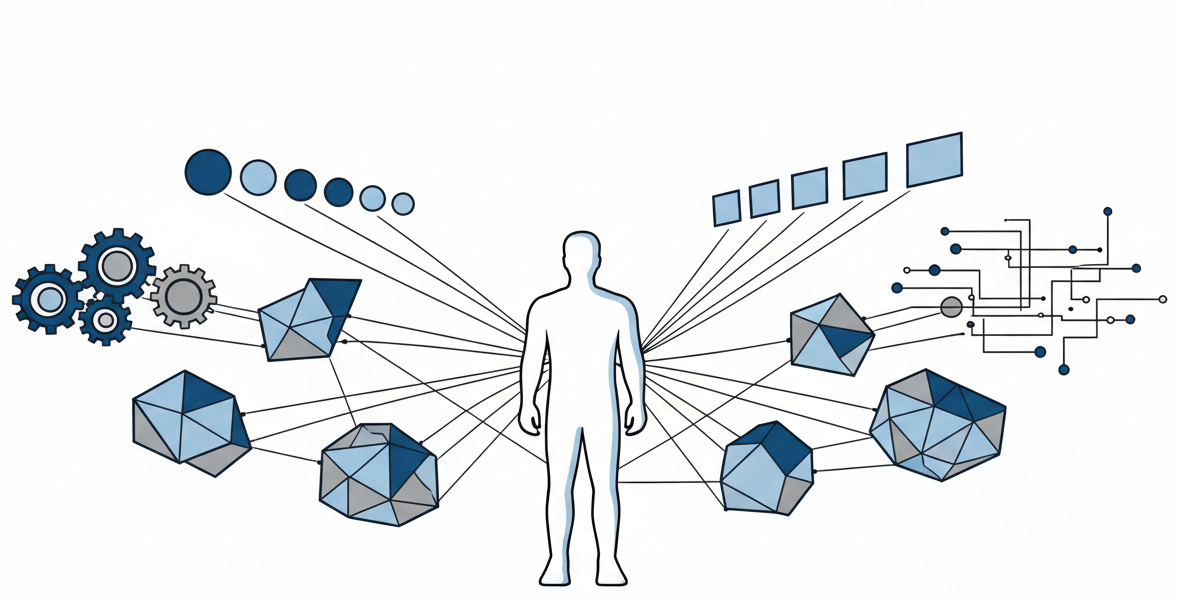
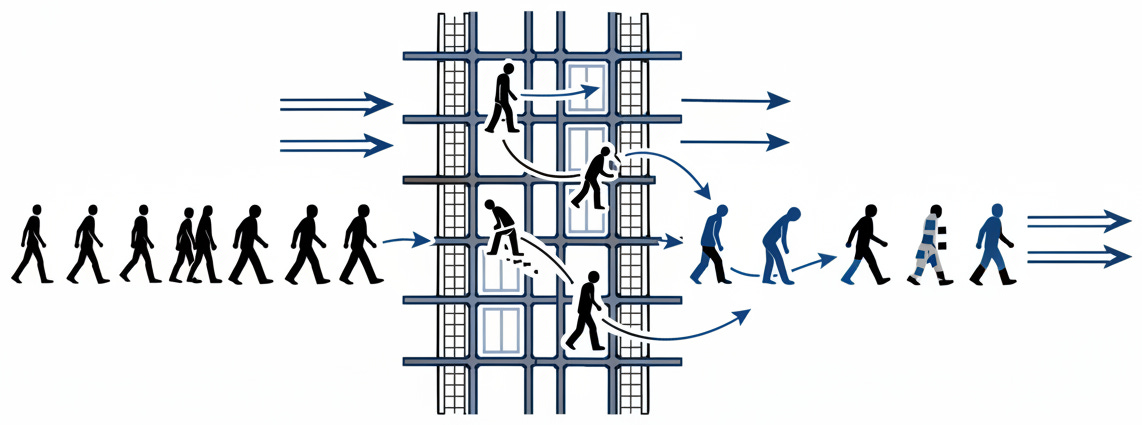
We mistake the loss of tasks for the loss of purpose. We assume that if a machine does the work, the role disappears. But a job is not a single task; it is a shifting portfolio of capabilities, judgments, and relationships that machines cannot replicate as a bundle. Machines are taking the afternoon. They are not taking the career.
The anxiety runs deeper than unemployment. It touches identity.
## Tasks and Jobs
The data predicts a shift from 34 percent to 42 percent machine-performed activities by 2027. Note the unit: activities, not employment. The trajectory is math, not mystery, and the math points one direction: automation absorbs the repetitive, the routine, the defined, leaving humans what remains. Discernment under uncertainty. Creative synthesis. The ability to read a room.
Adoption has doubled in under a year. Velocity. And velocity creates vertigo. Technology outpaces job descriptions, training programs, and most organisations’ capacity to absorb the change. But the reality in enterprises differs from the noise in headlines. Fast-growing positions are hybrids, people who bridge human and algorithmic capabilities. The prompt engineer who shapes how systems respond. The data translator who converts algorithmic output into strategic decisions. Declining functions are pure execution. The transition unfolds predictably.
AI reshapes occupations. It rarely destroys them. The financial analyst still exists, but they no longer pull data; they interpret it. The customer service representative no longer answers the routine question; they resolve the exceptional conflict. The portfolio shifts. The position evolves.
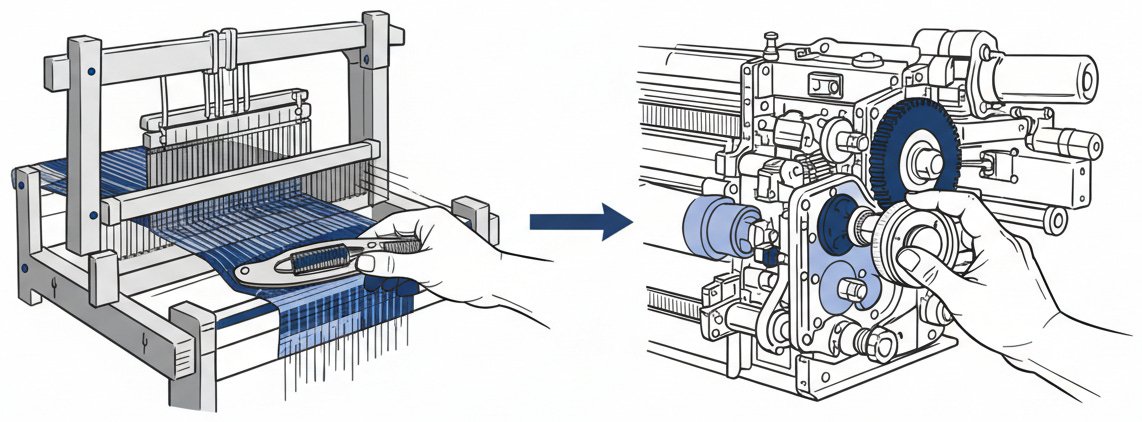
We have been here before. The industrial revolution reconfigured labour. The weaver did not vanish; the weaver transformed. Calloused hands that once threw shuttles learned to adjust tension across a dozen power looms, trading the rhythm of a single frame for the oversight of many. The profession survived by changing what it meant to weave. The computer age did the same to information professions. AI accelerates this dynamic, compressing decades of transition into years.
[](https://substackcdn.com/image/fetch/$s_!ZAJ-!,f_auto,q_auto:good,fl_progressive:steep/https%3A%2F%2Fsubstack-post-media.s3.amazonaws.com%2Fpublic%2Fimages%2F76bc1862-6bb6-42f6-a920-682e55f7c0b0_1142x422.png)
## The Augmentation Thesis
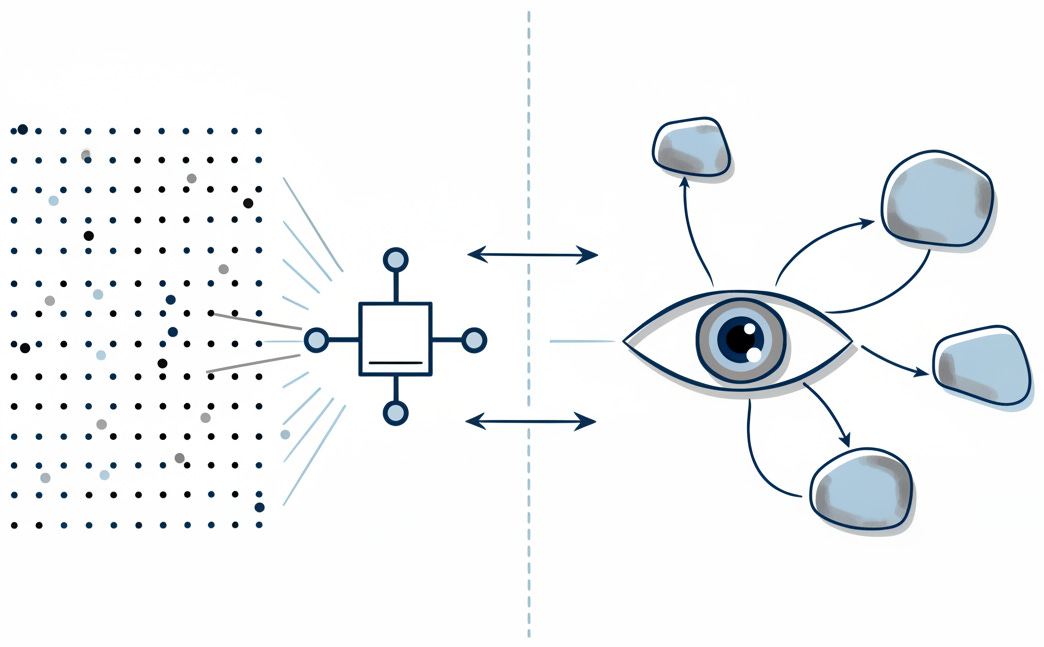
AI chatbots handle volume; humans handle complexity. The pattern holds. Evidence across industries points the same direction: tools achieve their highest impact when they amplify people, not when they substitute for them.
In healthcare, the handoff is now routine. An algorithm scans a chest X-ray and flags a shadow the radiologist might have missed on a busy Tuesday afternoon. The radiologist reviews the finding. Sometimes the flag is accurate and early detection saves a life. Sometimes it’s a false positive, an artifact or a benign anomaly that a trained eye recognises immediately. The algorithm finds what it was trained to find. The physician decides what to do about it. Neither function is diminished. Both are essential. Division of labour between pattern recognition and clinical discernment.
Neither the technology’s pattern recognition nor the person’s judgment achieves alone what both achieve together when properly orchestrated. Scale comes from tools. Judgment comes from people.
[](https://substackcdn.com/image/fetch/$s_!TnbY!,f_auto,q_auto:good,fl_progressive:steep/https%3A%2F%2Fsubstack-post-media.s3.amazonaws.com%2Fpublic%2Fimages%2Fd4436369-35af-4b5c-8a18-66e12c817966_1044x647.png)
Firms navigating this transition successfully treat AI as infrastructure, not magic. They identify where systems outperform and where humans outclass. They recognise that automation excels at pattern recognition and processing speed, while humans command novelty, ethical evaluation, and relationships. The failure mode is treating deployment as the destination. The moment a tool goes live is the moment the real endeavour begins.
## The Reskilling Imperative
Augmentation changes the work without eliminating humans from it. The activities shift anyway. When the position moves from execution to discernment, the capabilities required shift with it, which is why half the workforce requires reskilling by 2025.
The term sounds alarming, but misleads. We are talking about updating, not reinvention. Functions change. The job adapts. The person who learns to perform the new functions retains the position.
Consider the financial analyst. Five years ago, the occupation meant pulling data from multiple sources, cleaning it, and building spreadsheets before any interpretation began. Today, the analyst who can prompt an AI tool to aggregate that data in minutes, then spend hours on strategic interpretation, is worth three of the old model. The core job, advising decisions, remains. The activities that comprise it have shifted entirely. That is what updating looks like. The expertise compounds. The tedium disappears.
The economic logic is unavoidable. Retraining existing staff preserves institutional knowledge and costs less than hiring. Companies that treat workforce development as a capital investment outperform those who treat it as a cost centre. The differentiator has shifted: not what you know, but what you can do with what the system knows.
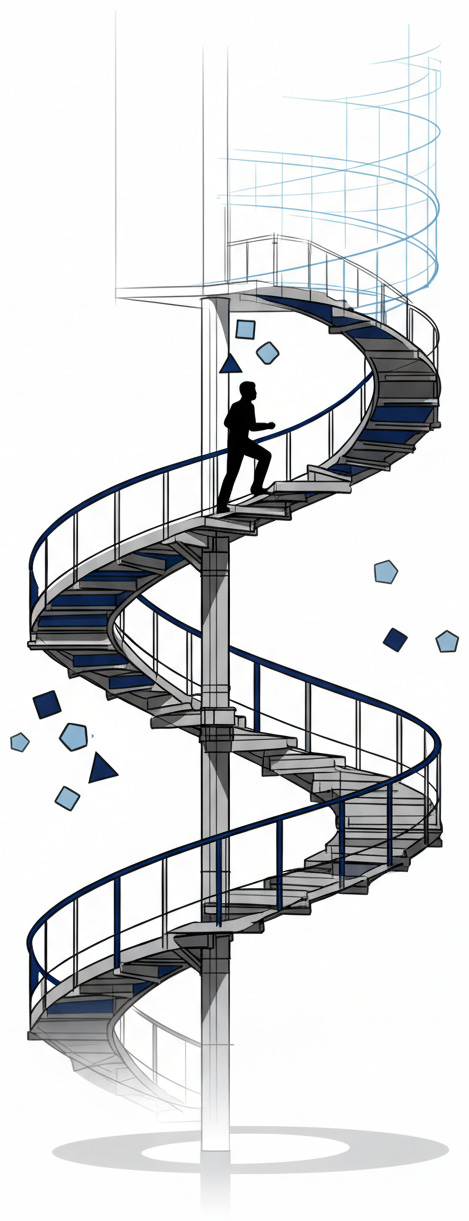
The era of education-then-career is over. The choice now is continuous learning or obsolescence. But this need not be a burden. Effective collaboration with AI tools compresses days of labour into hours. Automation absorbs the tedium so that humans can focus on the interesting.
[](https://substackcdn.com/image/fetch/$s_!-_eg!,f_auto,q_auto:good,fl_progressive:steep/https%3A%2F%2Fsubstack-post-media.s3.amazonaws.com%2Fpublic%2Fimages%2F880d80bd-e984-45d8-8b91-d501d14a3710_469x1221.png)
## Governance and Trust
Amazon built a recruiting tool that learned to discriminate against women because it trained on ten years of male-dominated resumes. The tool did exactly what it was told to do. That was the problem. AI inherits the biases of its training data and amplifies them at scale. Efficiency without governance is just accelerated error.
The regulatory trajectory is set. The EU AI Act mandates transparency and oversight for high-risk technologies, and these requirements are non-negotiable. Enterprises in hiring, lending, and evaluation must demonstrate their tools do not discriminate. Prove it or don’t deploy it. Companies building governance structures now gain advantage over those who will scramble to comply later.
Trust determines adoption. Employees embrace tools that assist them; they resist tools that surveil them. The technology is neutral. The implementation carries weight. Transparency about where AI is used, why, and with what safeguards is a performance issue, not merely a compliance one. The minimum standard: employees know when an algorithm influences decisions about their work, their performance, or their future. Governance is itself a responsibility that cannot be automated, one that determines whether the other shifts succeed or fail. Getting governance right shapes which trajectory we follow, whether AI becomes a tool for extending human capability or an engine that entrenches existing inequities at scale.
## What Trajectory Tells Us
Work’s future emerges from choices, not fate. The forces driving integration outweigh those resisting it. Productivity gains are too large to ignore; competitive pressure is too high to resist. The trajectory bends toward reconfiguration, not elimination.
Vanishing jobs share one trait: they could be automated. Emerging occupations share another: they require a human. The people who thrive will direct the system toward outcomes that require human judgment to define, rather than competing with the algorithm for activities it already owns.
This brings us back to identity. The anxiety about losing tasks that felt central to professional identity is not irrational; those losses are real, and the grief that accompanies them is legitimate. But the professional who sees AI as a threat to who they are has misunderstood both the threat and themselves. Your job was never the tasks. It was the judgment, the relationships, the ability to navigate ambiguity. Those remain yours. Will you claim them or cede the ground while clutching activities that were never the point?
Institutions that win will redesign work around the technology, not simply deploy it. Individuals who flourish will recognise that what made them valuable was never the execution.
We are not approaching an ending. We are approaching a filter. And filters have always favoured those who move before they must.
[](https://substackcdn.com/image/fetch/$s_!_Rg_!,f_auto,q_auto:good,fl_progressive:steep/https%3A%2F%2Fsubstack-post-media.s3.amazonaws.com%2Fpublic%2Fimages%2F9951cf3f-2b91-437a-a590-cbd8738ecc1b_1142x425.png)
The anxiety is understandable. Individual trajectories will vary; not everyone adapts at the same pace, and some will face genuine hardship in the transition. But while the concern deserves acknowledgment, the fatalism does not. The aggregate trend favours those who adapt.
* * *
### Further Reading, Background and Resources
## Sources & Citations
**[World Economic Forum Future of Jobs Report 2023](https://www3.weforum.org/docs/WEF_Future_of_Jobs_2023.pdf)** (May 2023)
The empirical backbone. The WEF surveyed 803 companies employing 11 million workers across 45 economies. Worth reading for methodology: the task-job distinction is baked into the survey design itself. Their longitudinal data since 2016 captures what actually happened versus what was predicted. Spoiler: predictions consistently overshoot.
**[Amazon Scraps Secret AI Recruiting Tool That Showed Bias Against Women](https://www.reuters.com/article/us-amazon-com-jobs-automation-insight-idUSKCN1MK08G)** by Jeffrey Dastin, Reuters (October 2018)
The canonical algorithmic bias case study. Amazon’s tool penalized resumes containing “women’s” and downgraded all-women’s college graduates. It did exactly what it was designed to do, which is precisely the problem. Reuters is a wire service where exaggeration carries legal consequences, making this a Tier 1 source.
**[The State of AI in 2024](https://www.mckinsey.com/capabilities/quantumblack/our-insights/the-state-of-ai-2024)** by McKinsey & Company (May 2024)
The velocity data. Generative AI adoption nearly doubled in under a year (33 to 65 percent). The interesting finding is buried in the appendix: companies involving workers in implementation see higher adoption and better outcomes than top-down deployments.
## For Context
**[EU AI Act Enters Into Force](https://commission.europa.eu/news/ai-act-enters-force-2024-08-01_en)** (August 2024)
The interesting tension: this law addresses technology that has already evolved past its assumptions. High-risk AI systems in hiring face mandatory transparency requirements by August 2026. The [implementation timeline](https://www.europarl.europa.eu/topics/en/article/20230601STO93804/eu-ai-act-first-regulation-on-artificial-intelligence) reveals the gap between regulatory pace and capability development.
**[World Economic Forum Future of Jobs Report 2020](https://www.weforum.org/press/2020/10/recession-and-automation-changes-our-future-of-work-but-there-are-jobs-coming-report-says-52c5162fce/)** (October 2020)
Read this alongside the 2023 report to see forecasts consistently move toward augmentation. The 2020 report predicted 47 percent task automation by 2025; by 2023, that was revised to 42 percent by 2027. The predictions keep softening because [the methodology improved](https://www.weforum.org/publications/the-future-of-jobs-report-2023/).
## Practical Tools
**Individual Reskilling Audit**
Forget organizational frameworks. Here is what you can do this week:
1. **Task Inventory** : List every task you performed in the past five days. Flag those involving pattern recognition, data aggregation, or routine decisions. Those are the tasks AI will absorb first. Everything else defines your human contribution.
2. **Automation Target Matrix** : Create a 2x2 grid. One axis: tasks AI can do better vs. tasks requiring your judgment. Other axis: tasks you enjoy vs. tasks you endure. The upper-right quadrant (AI-suitable + tedious) is your automation priority list. Start there.
3. **Skill Gap Action** : Review the WEF’s [Top 10 Skills of Tomorrow](https://www.weforum.org/stories/2020/10/top-10-work-skills-of-tomorrow-how-long-it-takes-to-learn-them/). Pick one skill from this list you do not currently practice. That is your reskilling priority. [LinkedIn Learning](https://www.linkedin.com/learning/) and [Coursera](https://www.coursera.org/) offer targeted courses on most.
## Counter-Arguments
**The Displacement Rate May Accelerate Non-Linearly**
The essay assumes smooth adoption curves based on historical patterns. But WEF’s 2020 report was written before GPT-3; the 2023 report before GPT-4 demonstrated emergent reasoning capabilities. Each capability jump expands “automatable tasks.” The augmentation thesis holds today, but the boundary is moving faster than precedent suggests.
**Reskilling Programs Systematically Fail**
A [comprehensive NBER review](https://www.nber.org/papers/w21324) by Heckman et al. (2015) found government retraining programs typically fail to improve employment outcomes. Corporate training fares little better. The 66 percent of employers expecting ROI within a year are measuring completion rates, not skill transfer. The reskilling imperative is real; institutional capacity to deliver it is not.
**The Task-Job Distinction Obscures Class Dynamics**
The augmentation thesis describes knowledge workers whose roles include judgment and relationships. For workers in roles consisting primarily of automatable tasks, “task elimination” and “job elimination” are semantically identical. The trajectory favors reconfiguration for the fortunate. Aggregates obscure who benefits and who is displaced.
**Governance Cannot Keep Pace**
The EU AI Act was negotiated before GPT-4 existed. By August 2026, when high-risk requirements take effect, the technology will have advanced through multiple generations. The Amazon tool that discriminated was built and abandoned years before any framework existed to prevent it. The regulatory gap is widening, not narrowing.